
Leave Management Trends Every HR Team Should Know
Employee leave management goes beyond simple monitoring of who is on leave and who is present. With the increasing size of workforces
- admin
- 11 September 2026
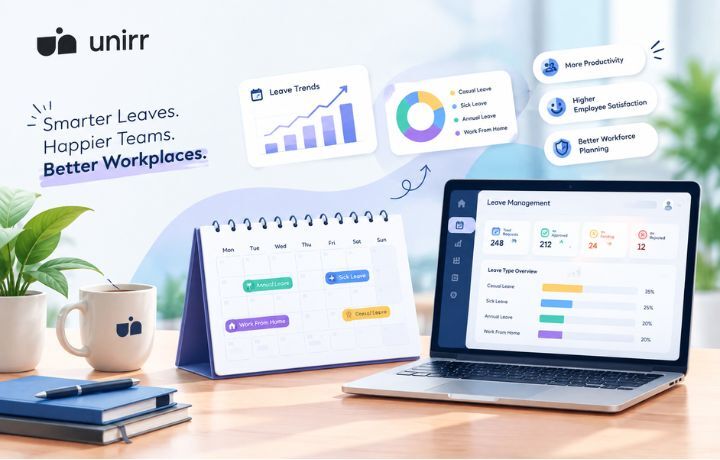
Employee leave management goes beyond simple monitoring of who is on leave and who is present. With the increasing size of workforces, HR personnel require a proper system of dealing with leave applications, approvals, attendance, balances, and planning. Leave administration is fast emerging as an indispensable component of HR functions in the contemporary business environment. Most companies continue to rely on manual systems such as spreadsheets and email communications. Modern digital leave and employee management systems are changing this approach by bringing leave processes into one place.
From employee self-service to automated workflows, new advanced HRMS software is helping HR teams create a more organized leave experience. Let’s explore the major trends and see how businesses can choose the right solution.
Leave Management System Is Moving Beyond Basic Leave Records
A modern leave management system does much more than store an employee’s leave history. It can help HR teams manage the complete leave lifecycle, from submitting a request to approval and tracking.
This shift is important because manual leave processes can consume valuable HR time. Employees may need to send emails, managers may have to check balances manually, and HR may update records separately.
Digital leave management brings these activities together.
What is changing?
Digital Leave Requests: Employees can submit requests without depending on paperwork.
Faster Approvals: Requests can move to the right manager through defined workflows.
Centralized Records: HR can keep track of leave details through a single system.
More Visibility: Managers can learn about the availability of their team members before approving the leave application.
Less Manual Labor: HR has to spend less time editing spreadsheets and verifying individual details.
Thus, leave management gets integrated into general workforce management.
Best Leave Management Application Trends HR Teams Should Watch
The best leave management application is no longer judged only by how easily employees can apply for leave. HR teams now expect broader functionality that connects leave, attendance, employees, and reporting.
Here are some important trends shaping leave management:
1. Employee self-service is becoming standard
Employees increasingly want direct access to their leave information. Self-service can allow them to view balances, submit requests, and track approvals. This also reduces repetitive questions for HR teams.
2. Automation is reducing repetitive HR tasks
Automated workflows can help HR teams manage routine activities more consistently. Systems can also support eligibility calculations and document tracking, depending on their capabilities.
3. Leave and attendance are becoming connected
Leave information becomes more useful when it works alongside attendance records. Therefore, businesses are looking for systems that can connect employee attendance, leave balances, and working patterns.
4. Mobile access is gaining importance
Employees and managers may need to submit or approve requests while away from their desks. A leave management app can make this process more convenient.
5. Data is becoming useful for workforce planning
Leave trends can help HR understand employee availability and workforce patterns. Better reporting also gives managers more visibility when planning teams.
6. Integration matters more than ever
Leave management solutions are increasingly expected to integrate with HR and payroll and other business systems. This could eliminate the need for duplication of data entry processes and improve the flow of HR processes.
How UNIRR HRMS Makes Leave Management More Connected
Instead of treating leave as an isolated HR activity, UNIRR HRMS brings employee management, attendance, leave, and payroll-related processes into a more connected workflow.
For HR teams, this means less switching between separate records. Employees can have a more structured way to manage their workplace information, while managers can get better visibility into attendance and availability.
UNIRR HRMS Leave Management Features
This makes UNIRR HRMS useful for organizations that want to move away from scattered spreadsheets and disconnected HR processes. A dedicated system can also help reduce the administrative burden associated with manual leave management.
Moreover, employees can benefit from a more straightforward digital experience instead of repeatedly contacting HR for basic leave information.
The Best Leave Management App: What Features Must It Have?
There are several matters to check when looking for the best leave management app, depending on the requirements of your business. A small firm requires basic leave management system functionality, but a growing business will likely require attendance integration, reports, workflow, and self-service options.
Before making a choice, ensure that the software includes:
Simple Leave Management System Login: Employees and managers should be able to access the platform easily.
Clear Leave Dashboard: Users should quickly understand balances and pending requests.
Employee Self-Service: Employees should be able to handle routine leave activities independently.
Attendance Register Software: Leave records should work alongside attendance information.
Attendance Management Application: HR should have better visibility into employee attendance and availability.
Time Off Management App Features: Employees should be able to request and track time away from work conveniently.
Flexible Policies: The system should support different leave rules and organizational requirements.
Useful Reports: HR should be able to review leave and attendance trends.
Integration Options: Connecting with payroll or HR systems can reduce duplicate work.
Some businesses may also search for a leave management app free option before investing. Nevertheless, cost should not be the only determining factor, because security, usability, reporting, scalability, and integration can have a significantly greater effect.
Conclusion
Leave management is becoming increasingly digital, integrated, and employee-oriented. Companies are starting to move away from using spreadsheets to using software systems that will be able to combine leave requests, approvals, attendance, balance, and workforce data into a single system.
The proper leave management application can help save administrative effort while providing a better leave management experience for employees. In addition, software like UNIRR HRMS may allow companies to integrate leave management with other HR processes.
When considering implementing new technology for HR management, leave management shouldn’t just be about digitizing leave requests. It should also be about creating an advanced leave management process.