
Managing Remote Employees with Smart HR Technology
Simply using technology is not enough to achieve proper remote employees management or necessary employee engagement in general.
- admin
- 26 October 2026
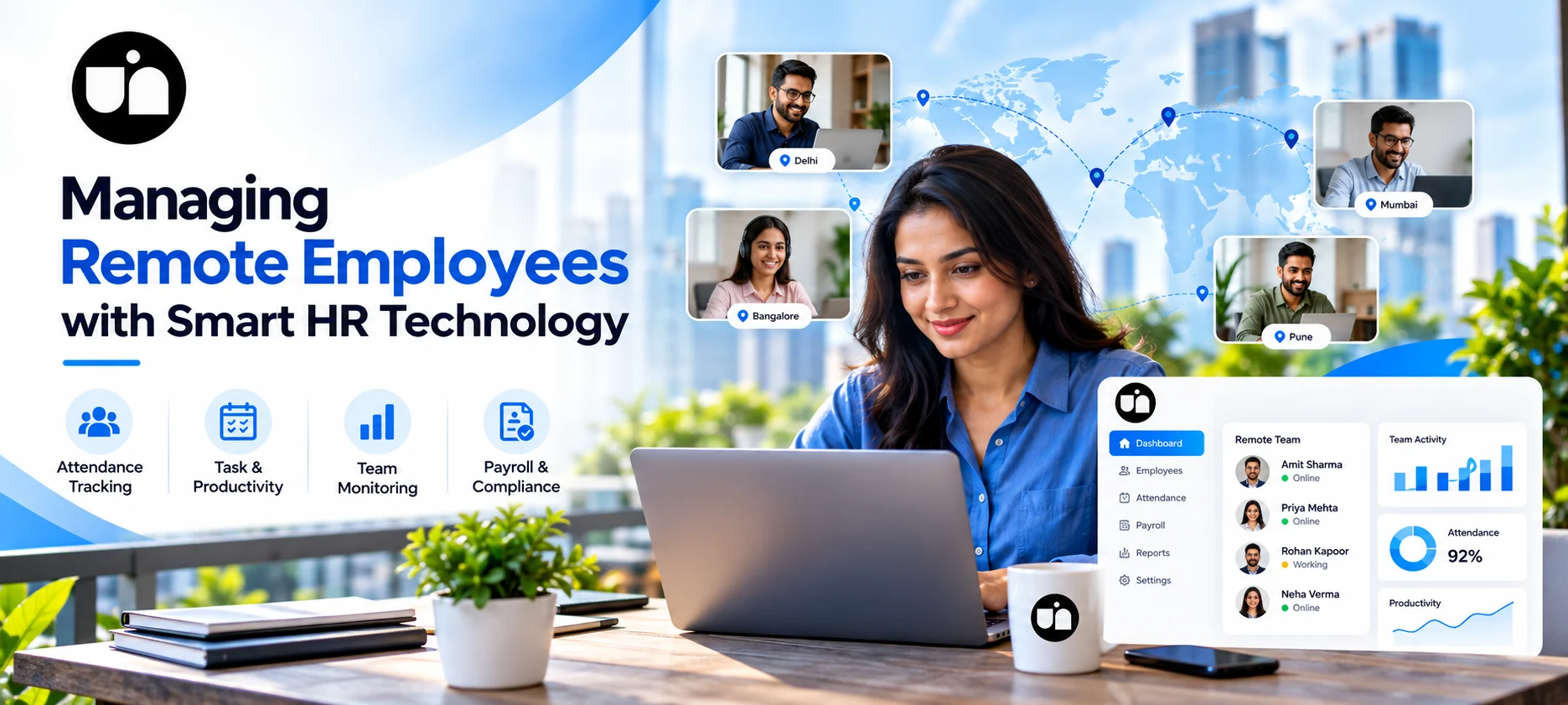
Simply using technology is not enough to achieve proper remote employees management or necessary employee engagement in general. People's motivation must also be taken into consideration, as well as feedback and the objectives clearly defined for them.
For supervisors in the field of managing employees, regular check-ups, rewarding performance, and giving regular business-related communication may be used as methods of keeping employees engaged in their work.
For instance, managers may arrange short one-on-one meetings every week, which are about 15 minutes long with their remote employees in order to understand their work status and problems.
Why Do Remote Employees Need Smart HR Tools?
However, as the number of employees grows, it becomes harder to keep track of the information about them. The information about them can be kept with ease by the Human Resources department using employee management software.
To illustrate this point, let us take an example of a company with 25 employees managing their information manually. If the number of employees rises to 100, then it becomes hard to retrieve information like contacts or dates of joining.
| Common Challenge | Example | How HR Technology Helps |
| Attendance tracking | HR checks 50 attendance sheets manually | Centralizes attendance records |
| Employee information | Details are scattered across multiple files | Organizes employee records |
| Payroll administration | Salary data needs repeated manual updates | Simplifies payroll-related workflows |
| Team coordination | Managers struggle to access updates | Improves access to relevant information |
| Reporting | HR spends hours preparing monthly reports | Makes records easier to review |
Digital HR systems help businesses establish consistent processes as their remote teams grow.
1. Simplify Employee Management with Digital Tools
The more employees there are, the more challenging it is to manage the information. Employee management software helps HR departments to easily manage the information.
Suppose there is an organization having 25 employees whose information is being managed manually. As the size of the organization grows to 100, it would become hard to access information such as contact details and employment.
A digital system can help businesses:
- Keep employee information organized.
- Reduce repetitive data entry.
- Access records more efficiently.
- Improve coordination between HR and managers.
2. Employee Attendance Software for tracking attendance
Monitoring attendance is not easy in situations when employees are working from different geographical locations and from different time zones. For proper attendance management, organizations can turn to employee attendance software for help in automatic attendance tracking and verification through automated processes.
Consider this illustrative example:
| Attendance Metric | Example |
| Total Employees | 50 |
| Working Days in a Month | 22 |
| Expected Employee Workdays | 1,100 |
| Attendance Records Requiring Review | 55 |
| Records Requiring Review as a Share of Workdays | 5% |
If 55 attendance records require checking, organized digital records can help HR identify discrepancies more efficiently. These figures are hypothetical and do not represent actual UNIRR performance.
3. Manage Salaries with an Employee Payroll Management System
Salary management is all about accuracy in collecting employee data, inputs for attendance, when relevant, and calculating the same consistently. The employee payroll management system assists in maintaining payroll data and saves time from administrative work.
Take the example of an imaginary employee earning ₹30,000 monthly.
| Salary Particular | Illustrative Amount |
| Monthly Gross Salary | ₹30,000 |
| Illustrative Deductions | ₹2,000 |
| Illustrative Net Salary | ₹28,000 |
A suitable payroll workflow can help businesses maintain salary records and prepare payroll information more consistently.
4. Is Free Staff Tracking Software Suitable for Your Business?
The majority of small business organizations always try to find out free employee tracking software before purchasing HR software. Free versions can provide some features; however, their capabilities and limitations vary from vendor to vendor.
| Feature to Compare | What to Check |
| Attendance Tracking | Can employees record attendance remotely? |
| Employee Records | Can HR maintain essential staff details? |
| Reporting | Are useful reports included? |
| User Limits | How many employees can be added? |
| Security | How are employee records protected? |
| Upgrade Costs | Which features require payment? |
5. Improve Workforce Visibility with a Staff Tracking App
A staff tracking app can help managers access employee information and relevant work updates through supported devices.
For example, a manager responsible for 15 remote employees may need to review attendance records and coordinate schedules without contacting each employee individually.
A suitable application can help with:
- Accessing attendance information.
- Reviewing relevant employee records.
- Improving team coordination.
- Reducing repeated administrative updates.
Businesses should communicate tracking policies clearly and respect employee privacy.
6. Make Your Remote Employees Active and Productive
Advanced technology alone is not sufficient to guarantee the quality of remote work or engagement of the staff members. The best way to motivate employees is through provision of motivation, feedback, goal setting, and opportunities for development.
Thus, to make it easier for the employees to be involved in the work process, it is important to implement the system of regular interactions with employees and be ready to give the updates of the business.
For instance, managers can conduct 15-minute calls with each of the employees every week and talk to them about their performance, problems, and priorities.
7. Choose the Right Staff Management Services
Reliable staff management services and digital HR tools can help businesses organize everyday workforce activities.
Before selecting a solution, compare your requirements against the available features.
| Business Requirement | What to Look For |
| Small team management | Simple employee record management |
| Remote attendance | Digital attendance tracking |
| Salary administration | Organized payroll records |
| Growing workforce | Scalable user capacity |
| HR reporting | Accessible attendance and employee reports |
| Budget control | Transparent pricing and plan limits |
Businesses considering Staff tracking software free should verify the free plan's actual limitations, support options, and upgrade costs before committing.
How UNIRR Supports Remote Employee Management
UNIRR assists companies in organizing their employees and attendance. The use of the correct features will allow teams to make their administrative work much easier and help with attendance checks.
When selecting a suitable plan for you and your team, consider your requirements and what features UNIRR provides.
Conclusion
The process of managing remote workers gets simplified when businesses make use of the right combination of HR policies and the proper digital technology. Right from managing employees to attendance, payroll management, and coordinating among employees, efficient HR technology could make the work simpler.
UNIRR is an employee management software that assists companies in managing their employees in a systematic manner.